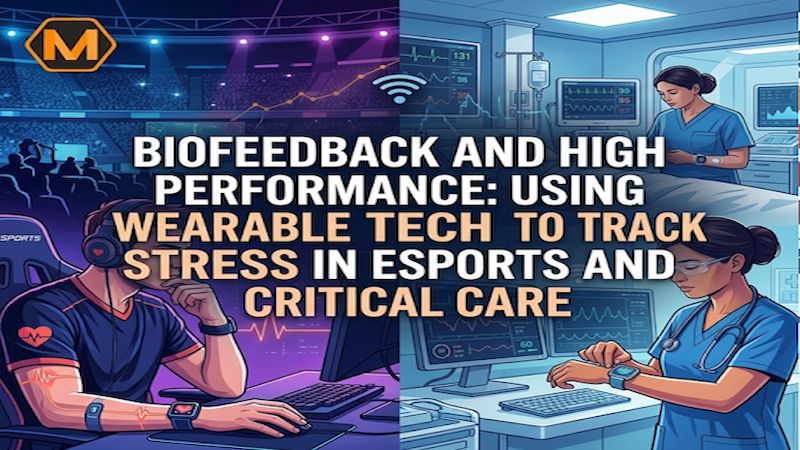
Biofeedback and High Performance: Using Wearable Tech to Track Stress in Esports and Critical Care Nursing
The human body reacts to high-stress environments in remarkably consistent ways, whether a person is sitting in an ergonomic chair competing in a million-dollar esports tournament or standing on a sterile hospital floor saving lives. Both worlds require split-second decision-making, sustained psychological focus, and absolute emotional control under pressure. In recent years, the adoption of wearable technology has revealed incredible physiological parallels between professional competitive gamers and critical care nurses. By tracking real-time biofeedback data, researchers are uncovering how the human nervous system manages intense pressure and how these two seemingly different professions can share strategies to combat burnout.
Managing this constant influx of physical and mental stress requires structured recovery systems, a reality that applies directly to professionals and students alike. For individuals balancing demanding medical rotations alongside a heavy academic load, finding time to analyze complex biometric data can be overwhelming. Utilizing a dedicated essay writing service helps manage these intense workloads effectively, and myassignmenthelp provides the exact analytical support required to transform raw clinical data into flawless research papers. By outsourcing the tedious mechanics of data compilation, busy individuals can focus entirely on mastering practical, real-world skills without sacrificing their mental well-being or academic performance.
1. The Physiology of High-Stakes Environments: Gamers vs. ER Nurses
When a person enters a high-pressure situation, the autonomic nervous system takes over. The sympathetic branch triggers the well-known “fight-or-flight” response, releasing hormones like cortisol and adrenaline. In a critical care nursing unit, this happens when a patient’s monitor suddenly sounds an alarm, requiring immediate, precise medical intervention. In esports, a similar spike occurs during a high-stakes team fight in a tournament bracket, where a single misclick can eliminate a team from competition.
Wearable sensors—such as smart rings, biometric wristbands, and chest straps—track these internal shifts by measuring specific biological indicators:
- Heart Rate Variability (HRV): This measures the specific time variation between consecutive heartbeats. A high HRV indicates a flexible, resilient nervous system that can handle stress smoothly, while a low HRV signals that the body is trapped in a state of deep exhaustion.
- Galvanic Skin Response (GSR): Also known as electrodermal activity, this tracks tiny changes in sweat gland activity, offering an immediate window into emotional arousal and psychological stress levels.
- Continuous Blood Pressure Monitoring: This tracks the physical toll of sustained adrenaline spikes over extended periods, revealing the exact moments cognitive fatigue begins to degrade physical performance.
Comparative Stress Profiles: Esports vs. Critical Care Nursing
| Physiological Metric | Professional Esports Athlete (In-Match) | Critical Care Nurse (ICU/ER Shift) |
| Average Heart Rate | 120 – 160 BPM (Spikes during combat) | 110 – 140 BPM (Spikes during patient crises) |
| Adrenaline Levels | High (Triggered by rapid visual stimuli) | High (Triggered by acute clinical alarms) |
| Primary Stress Type | Acute cognitive and mental pressure | Combined physical endurance and emotional stress |
| Cortisol Fluctuations | Sharp peaks followed by sudden crashes | Sustained elevated levels over 12-hour shifts |
Export to Sheets
Data collected from these devices shows that an elite esports player navigating a chaotic in-game environment experiences heart rates and hormonal surges that mirror an emergency room nurse managing a critical trauma patient. Both roles demand peak cognitive processing while operating under an identical physiological load.
2. Deciphering Cognitive Fatigue and the “Tilt” Phenomenon
In competitive gaming, the term “tilt” describes a state of emotional frustration where a player begins making poor tactical decisions due to accumulated stress. In healthcare, this exact psychological state manifests as clinical tunnel vision or decision fatigue, where a tired clinician might struggle to prioritize competing patient needs effectively.
Wearable technology allows organizations to see this cognitive decline happening in real-time before it results in a costly mistake. When a person’s HRV drops below a specific baseline for several hours, their working memory, spatial awareness, and emotional regulation suffer significantly. The brain simply runs out of the energy required to process incoming data efficiently.
[Sustained High Stress] ──> [Adrenaline Drop] ──> [Low HRV Reading] ──> [Cognitive Tunnel Vision / Tilt]
By analyzing these biofeedback trends, team coaches and hospital administrators can spot the precise moments an individual’s performance begins to decay. Instead of pushing through the fatigue—which leads to compounding mistakes in gameplay or medical documentation—the biometric data provides an objective signal that it is time for a mandatory recovery break.
3. Burnout Mitigation Frameworks: Data-Driven Solutions
The primary goal of tracking bodily data is not just to observe stress, but to actively change how workloads are managed. Both critical care nursing and professional gaming are notoriously high-turnover industries due to chronic exhaustion. To build long-term career endurance, institutions are testing new resource management models that treat human energy as a quantifiable asset.
The Human Capital Optimization Matrix
| Stress Metric Profile | Current Physiological State | Recommended Operational Action |
| High HRV / Normal Skin Response | Peak Cognitive Readiness | Execute high-complexity tasks (Triage, Tactical shot-calling) |
| Elevated Heart Rate / Rising GSR | Active Stress State | Monitor performance; limit continuous shift time to 90-minute blocks |
| Suppressed HRV / Sustained High Heart Rate | Severe Cognitive Fatigue | Mandatory removal from active duty; transition to rest or routine administrative work |
Export to Sheets
Using this data-driven matrix, supervisors can adjust schedules dynamically based on real physical metrics rather than subjective guesses. For an ER nurse, this might mean rotating out of the high-intensity trauma bay into a lower-stress triage area after their metrics signal high stress. For an esports athlete, it means stepping away from scrimmage matches to engage in low-stimulus physical recovery.
4. Academic Hurdles in Medical Training: Alleviating the Burden
The pressure to perform under intense stress starts long before a professional steps onto the hospital floor or into a competitive arena. For instance, nursing students are regularly subjected to an incredibly grueling schedule that combines exhausting 12-hour hospital clinical rotations with heavy academic requirements. They are expected to demonstrate perfect bedside clinical judgment during the day and then spend their nights writing extensive, evidence-based research reports, care plans, and detailed physiological case studies.
This double burden often causes severe academic burnout before their professional careers even begin. When balancing these extreme requirements, many students realize that trying to manage every single paper independently leads to severe sleep deprivation, which destroys their clinical performance. To protect their health and keep their grades high, finding options to buy nursing essay assignments allows students to hand over their heavy writing projects to qualified research specialists. This strategic outsourcing ensures their academic coursework meets rigorous institutional standards while giving students the time they need to sleep, recover, and master hands-on medical procedures.
5. The Role of Wearable Hardware in Early Fatigue Detection
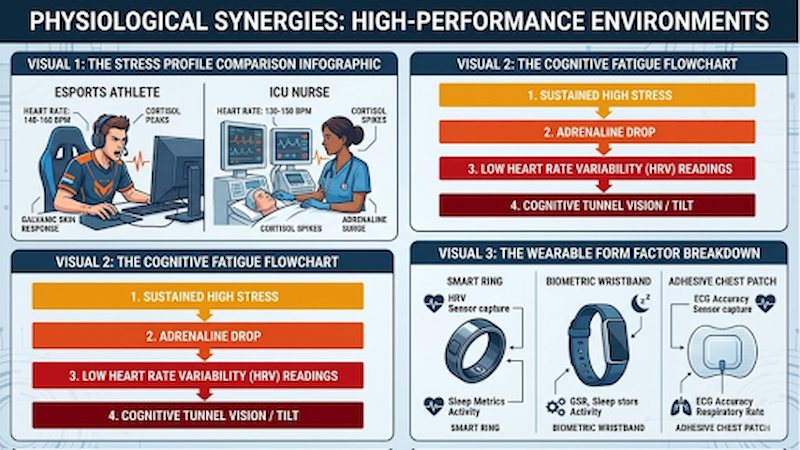
To fully understand how these metrics are captured, we must examine the specific wearable form factors deployed in the field. Unlike bulky laboratory equipment, modern workplace biosensors must be completely non-obtrusive so they do not interfere with fine motor skills or clinical safety protocols.
Wearable Technology Comparison
- Smart Rings: These devices sit quietly on the finger, using infrared photoplethysmography (PPG) sensors to measure blood flow trends right through the digital arteries. They excel at mapping resting heart rate trends and overnight sleep stages without getting in the way of sterile medical gloves or mechanical keyboards.
- Biometric Wristbands: Built without distracting digital screens, these bands prioritize continuous data collection. They capture galvanic skin response through small metallic nodes that stay in contact with the skin, mapping emotional spikes during high-intensity matches or chaotic hospital emergencies.
- Adhesive Biosensor Patches: Often worn directly on the chest, these medical-grade smart patches monitor real-time electrocardiogram (ECG) data and respiratory patterns. They offer the highest level of accuracy for tracing heart rhythm changes under acute, unexpected stress.
6. Implementing Biofeedback Training Protocols
Collecting biometric data is only half the battle; the real value lies in teaching professionals how to respond to their own physiological signals. When a wearable device alerts a user that their stress metrics are climbing, they can deploy immediate, evidence-based calming techniques to stabilize their nervous system.
One of the most effective methods shared between esports teams and clinical environments is Heart Rate Variability (HRV) Biofeedback Training. This technique trains individuals to synchronize their breathing patterns with their heart rate rhythms, a practice known as resonant frequency breathing.
By practicing this specific breathing pattern for just three to five minutes during a break, workers can manually kickstart their parasympathetic nervous system. This quick intervention lowers blood pressure, stops sweat gland overactivation, and clears the mental fog associated with cognitive tunnel vision, keeping the professional sharp and focused.
7. Wearable Tech Integration: The Future of Workforce Sustainability
As wearable sensors become smaller, more accurate, and less invasive, their integration into everyday work uniforms will become standard practice. Future smart scrubs and gaming jerseys will feature built-in conductive fibers that continuously feed data to advanced scheduling software, automatically predicting exhaustion before the individual even realizes they are reaching their limit.
Long-Term Benefits of Wearable Biosensors
- Objective Scheduling: Shifting away from rigid, arbitrary shift patterns toward flexible, health-focused rotations based on real-time recovery data.
- Early Burnout Interventions: Spotting chronic exhaustion trends weeks before they cause professional detachment, high turnover rates, or medical errors.
- Tailored Recovery Systems: Providing professionals with exact, personalized data regarding which rest techniques work best for their specific bodies.
Ultimately, the insights gained from comparing esports and critical care nursing prove that high-performance management is universal. Human beings are not machines; our brains and bodies require structured, intentional periods of rest to maintain precision over time. By using wearable technology to monitor biofeedback and embracing smart delegation strategies to reduce administrative workloads, both healthcare systems and competitive gaming organizations can protect their most valuable assets: their people.
Frequently Asked Questions
- How do wearable devices track physiological stress?
Wearable tech uses built-in optical and electrical sensors to measure subtle biological shifts. By monitoring variations in the timing between heartbeats, changes in sweat gland activity on the skin, and shifts in resting heart rate, these devices provide an objective, real-time window into how the nervous system reacts to high-pressure workloads.
- What common indicators do competitive players and healthcare workers share?
Biometric data shows that both professions experience identical physiological spikes during high-stakes moments. When facing acute crises or intense in-game scenarios, both groups experience rapid heart rate surges, elevated adrenaline production, and a distinct drop in heart rate variability, signaling heavy cognitive strain.
- What happens to the brain when stress metrics remain high for too long?
Sustained physical pressure triggers cognitive fatigue, often causing tunnel vision, loss of working memory, and emotional frustration. When the body stays in a continuous fight-or-flight state, the brain loses its ability to process incoming information efficiently, which heavily degrades decision-making and performance.
- How can individuals use real-time biofeedback to prevent sudden exhaustion?
When alerts signal rising tension, workers can practice intentional, deep-breathing exercises for a few minutes. Synchronizing inhalation and exhalation rhythms manually activates the body’s natural relaxation response, which effectively lowers blood pressure, clears mental fog, and restores focus.
About The Author
Ella Thompson is a senior digital content strategist and performance consultant representing myassignmenthelp. She specializes in developing productivity frameworks, educational workflows, and high-performance lifestyle content for modern students and creators.